DNA Close Up Backgrounds: Infuse Your Screens with Scientific Wonder
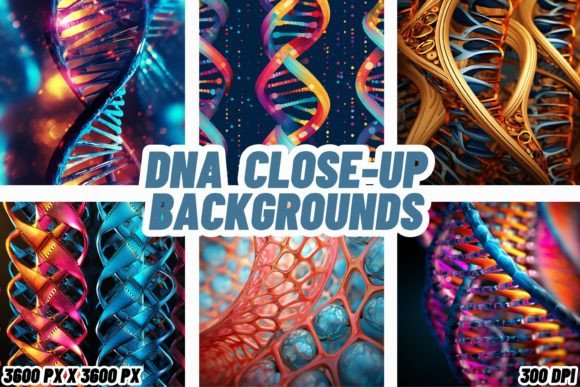
There's a particular kind of beauty that only emerges when you look at familiar things from an unfamiliar angle. We see DNA referenced constantly in science, medicine, and even popular culture, but how often do we really stop to appreciate its visual complexity? The iconic double helix is more than a biological schematic—it's a dance of molecular architecture, a testament to the elegant coding that underpins all living things. This collection, DNA Close Up Backgrounds, offers a chance to see that structure not as a diagram, but as a piece of art. These aren't sterile, textbook illustrations. They are intimate, vibrant portraits of the molecule of life, captured in a way that feels both scientifically profound and aesthetically captivating.
Imagine the screen of your laptop or the backdrop of your next video call transformed. Instead of a generic landscape or a solid color, you're greeted by the intricate, spiraling forms of DNA, rendered in stunning high definition. The visual personality of these backgrounds is a fascinating blend of the organic and the futuristic. You'll find deep, cosmic blues and purples that evoke the vastness of space, contrasted with brilliant, luminous strands that seem to pulse with energy. The style leans into a kind of scientific realism, but with an artistic flair that emphasizes texture, light, and shadow. It's a modern typography of biology, where the "letterforms" are the nucleotides themselves, and the "composition" is the helical structure. This isn't just a pretty picture; it's a statement piece for your digital environment.
Where Science Meets Creative Application
The practical applications for such a unique visual asset are surprisingly diverse, extending far beyond simple desktop decoration. For designers and brand strategists, these backgrounds offer a powerful tool for creating a distinct brand identity, particularly for clients in the biotech, health science, pharmaceutical, or educational sectors. A logo design for a genetics startup, for instance, could be presented against one of these backdrops to instantly communicate innovation, precision, and a connection to the fundamental building blocks of life. In editorial design, a magazine spread or a book cover about medical breakthroughs or human biology would find a perfect, thematic partner in these images, adding a layer of visual depth and authority that stock photos often lack.
For marketers and content creators, the value lies in stopping power. In the endless scroll of social media, a social media graphics post framed by a captivating DNA close-up is far more likely to pause a viewer's thumb than another generic graphic. It injects a sense of wonder and sophistication into a feed. Think of a webinar slide deck for a medical conference, a YouTube video thumbnail about ancestry, or an Instagram story promoting a new wellness supplement. The background does the heavy lifting, establishing context and elevating the perceived professionalism of the content. For entrepreneurs and small business owners, using these backgrounds in Zoom calls or virtual presentations can subtly reinforce their field of expertise without a word being spoken. It's a form of visual shorthand for credibility and forward-thinking vision.
Practical Guidance for Integration and Use
So, you're intrigued. How do you actually work with a design asset like this? First, consider the project's tone. The DNA Close Up Backgrounds collection has a personality that is inherently scientific, modern, and slightly mysterious. It works best where that tone is appropriate. It would be a fantastic fit for a tech conference poster, but perhaps less so for a whimsical children's party invitation. Always evaluate the fit between the asset's inherent style and your project's message.
Next, think about integration. These backgrounds are not a serif font or a sans serif font that you set body copy on top of; they are environmental textures. The key is to ensure your foreground elements—text, logos, UI components—have enough contrast and clarity. A common practice is to use a semi-transparent overlay or a solid color block to create a readable "canvas" over a busy part of the image. When pairing with typefaces, opt for clean, modern typography. A geometric sans-serif often complements the organic curves of the DNA helix beautifully, creating a harmonious balance between the biological and the typographic. Avoid overly decorative script fonts or handwritten fonts that might clash with the image's scientific precision.
Finally, a word on practicality. The collection includes 12 distinct HD images, giving you variety to match different project moods or to maintain a consistent theme across a series of materials. Because these are high-resolution premium font equivalents in the background world, they are suitable for both digital and high-quality print applications, from website banners to large-format event signage. As with any commercial font or asset, it's wise to review the licensing terms to ensure they cover your intended use, whether personal, for a client, or for commercial distribution. By thoughtfully selecting the right image from the set, testing how your text and graphics interact with it, and ensuring the final result aligns with your project's goals, you can leverage these backgrounds to create something truly memorable. They are more than just decoration; they are a tool for storytelling, allowing you to weave the narrative of life's code into your visual communications.