Grey Grunge Texture Backgrounds: Elevate Your Craft Projects
The Raw, Industrial Appeal of Grey Grunge
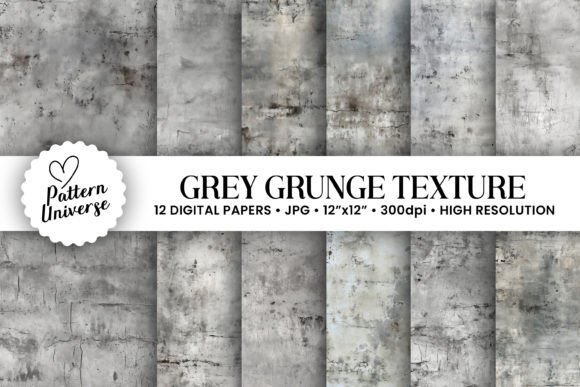
Grey grunge texture backgrounds are more than just a collection of random smudges and stains. They represent a specific aesthetic that feels authentic, weathered, and full of character. Unlike a sterile, flat grey background, a grunge texture tells a story. It suggests history, industrial processes, and the beautiful imperfections that occur with time and use. The visual personality is often described as raw, edgy, and urban. It has a tactile quality that draws the viewer in, making digital projects feel more grounded and tangible. This style is incredibly versatile, offering a sophisticated neutral that can anchor a wide range of design styles, from minimalist to maximalist.
The included set of 12 seamless patterns provides a curated range of this aesthetic. You'll find variations that mimic distressed concrete, worn metal plating, gritty asphalt, and subtly stained paper. Each texture has its own unique character—some are more uniform with a fine grain, while others feature bolder marks and scratches for a more pronounced effect. This variety is crucial for real-world application, allowing you to select the perfect background that matches the specific mood you're trying to create. The high-resolution 300dpi and 3600 x 3600 pixel dimensions ensure these assets are professional-grade, suitable for both digital screens and high-quality print output without any loss of detail or pixelation.
Practical Applications for Designers and Crafters
The true value of a design asset lies in its application. Grey grunge texture backgrounds are surprisingly adaptable, finding a home in projects that demand both professionalism and personality. For entrepreneurs and small business owners, these textures can instantly add depth to brand identity materials. Use them as a background for your logo on business cards or letterheads to create a memorable impression. They work exceptionally well for brands in the creative, artisanal, or tech spaces where a touch of grit communicates authenticity and innovation.
For marketers and content creators, these backgrounds are a secret weapon for social media graphics. A grunge texture can make a quote post or promotional image stand out in a crowded feed, adding visual interest that a plain background cannot. They are also perfect for packaging design, especially for products like craft coffee, indie books, or specialty tools where the texture complements the product's story. In editorial design, such as magazine layouts or blog post headers, a grunge texture can serve as a powerful backdrop that doesn't compete with typography but enhances the overall layout's sophistication.
For the hobbyist and crafter, the applications are equally rich. These digital papers are ideal for gift wrapping, greeting cards, and invitations where a handmade, tactile feel is desired. They provide a fantastic base layer for scrapbook layouts, adding dimension and interest without overwhelming your photos and embellishments. Tumbler wraps and other physical craft projects benefit from the seamless nature of the patterns, ensuring a professional, repeatable finish every time.
Integrating Texture into Your Design Workflow
Using a grunge texture effectively is about balance and intention. The goal is to enhance your project, not dominate it. A common and effective technique is to use the texture as a background layer and then apply a blending mode like "Multiply" or "Overlay" in your design software. This allows the texture to interact with the colors and elements above it, creating a more integrated and natural look. You can also adjust the opacity of the texture layer to dial its intensity up or down, depending on whether you want a subtle hint of grit or a more dramatic effect.
When it comes to font pairing, grey grunge textures provide a stable, neutral foundation that works with a wide array of typefaces. For a modern, clean contrast, pair the textured background with a crisp sans serif font. If you're aiming for a more traditional or elegant feel, a classic serif font can create a beautiful juxtaposition against the raw backdrop. Script fonts and handwritten fonts can also work wonderfully, especially for invitations or logo design, as the texture adds a layer of sophistication to the more casual letterforms. The key is to ensure your chosen typeface remains highly readable against the texture's detail—always test your text at the final size and on the intended medium.
Evaluating project fit is straightforward. Ask yourself if the project's message aligns with the qualities of the texture: authenticity, resilience, and character. This isn't the right choice for a project requiring a purely playful, whimsical, or ultra-corporate sterile aesthetic. However, for anything that benefits from a touch of realism and depth, it's an excellent candidate. The commercial licensing included with these assets typically covers a wide range of uses, from personal projects to commercial products for sale, making them a valuable addition to your design toolkit. Always review the specific license terms to ensure compliance, especially for large-scale distribution.
Ultimately, incorporating grey grunge texture backgrounds into your work is about adding a layer of visual storytelling. They provide a sense of place and history, transforming flat digital designs into something that feels lived-in and real. Whether you're a designer crafting a brand identity, a publisher laying out an editorial design, or a crafter making a one-of-a-kind greeting card