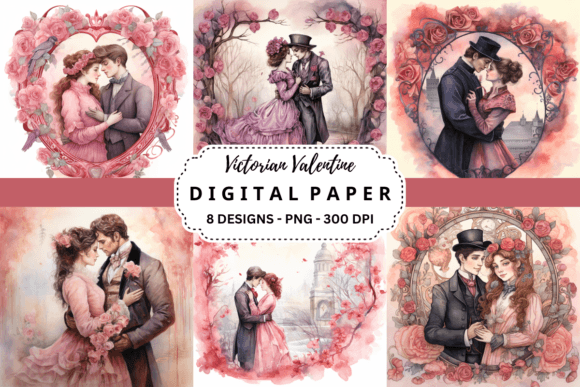
Victorian Valentine Backgrounds: Crafting Timeless Romance
There is a specific weight to Victorian design that modern minimalism often lacks. It is intricate, deliberate, and unapologetically ornate. When you look at Victorian Valentine Backgrounds, you aren’t just seeing a pattern; you are accessing a visual language of sentimentality and grandeur. For designers and entrepreneurs, these backgrounds offer a distinct alternative to the flat, vector-based aesthetics that dominate the current market. This collection provides the raw material to build designs that feel rich, textured, and historically grounded.
The Anatomy of the Aesthetic
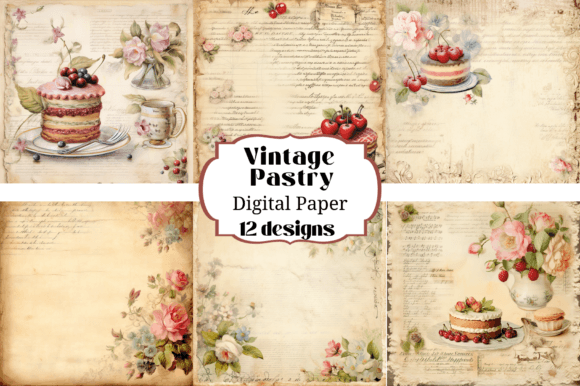
Understanding the visual style of these assets is crucial for effective implementation. Victorian design is characterized by its density. We are talking about heavy ornamentation, floral motifs, filigree borders, and a general sense of abundance. The personality of these backgrounds is warm, nostalgic, and deeply romantic. They evoke an era where communication was an art form, and a Valentine’s card was a keepsake.
The overall appeal lies in the complexity. Unlike modern geometric patterns, Victorian textures have a "lived-in" quality. They suggest a story. Whether you are working on a vintage brand identity or a historical publication, the visual weight of these designs anchors the viewer's attention. They are not merely decoration; they are atmosphere generators.
Practical Applications for Modern Creators
One of the biggest misconceptions about vintage assets is that they are only suitable for historical projects. That is a limiting view. While these backgrounds are perfect for period-specific work, their utility extends far beyond that. Here is where the versatility of the Victorian Valentine Backgrounds truly shines across various industries.
Print on Demand and Physical Products
For those in the print-on-demand space, texture is your best friend. Digital printing can sometimes look flat or sterile. Using high-resolution Victorian backgrounds as a base layer adds instant depth to your products. Consider applying these to:
- Wrapping Paper: A seamless Victorian pattern creates a luxurious unboxing experience that feels premium.
- Invitation Cards: Wedding planners and stationery designers can use these as the foundational layer for save-the-dates or wedding suites.
- Scrapbooking: Hobbyists and digital scrapbookers often look for layered, textured papers. These files offer the perfect canvas for memory keeping.
- Fashion Projects: Surface pattern designers can manipulate these motifs to create vintage-inspired textiles for scarves or upholstery.
Digital Branding and Marketing
In the digital realm, standing out is difficult. Social media feeds are often a blur of sans-serif text on solid color blocks. Introducing a Victorian element can disrupt the scroll and capture attention.
Think about the social media post template design. A background featuring intricate lacework or faded rose motifs sets a specific mood immediately. It works exceptionally well for brands in the wellness, beauty, or artisanal food sectors that want to convey a sense of tradition and care. Furthermore, for poster & banner design, these backgrounds provide a rich canvas that allows modern typography to pop. The contrast between a clean, modern sans-serif font and a complex Victorian background creates a dynamic visual hierarchy.
Technical Specifications and Design Integrity
As a professional, you know that the aesthetic appeal means nothing if the technical specs fail. The value of this asset pack lies in its quality. You are receiving Individual PNG Files at HIGH QUALITY 300 DPI. This is non-negotiable for print work.
With dimensions of 3600 x 3600 pixels, these files are massive. This size allows for significant manipulation. You can crop in tightly on a specific detail of the design to create a new texture, or scale it up for large-format printing without worrying about pixelation. This high resolution ensures that whether you are designing a small label or a large trade show banner, the integrity of the image remains intact.
Integrating Victorian Assets into Modern Workflows
How do you use these backgrounds without making your design look like a costume? The answer lies in contrast and moderation.
Typography and Hierarchy
Victorian backgrounds are visually "busy." If you pair them with an equally busy script font or a highly decorative handwritten font, the result will be illegible. The best practice is to use a clean, legible sans serif font for body copy and perhaps a bold serif font for headlines. This creates a bridge between the vintage background and the modern message. The background sets the mood, but the typography delivers the information.
Color Theory and Layering
These assets are not just static images to be slapped onto a canvas. They are tools for layering. In your design software, try adjusting the opacity or the blending modes (like Multiply or Overlay). You can use a Victorian texture to age a modern photograph or add a subtle grunge effect to a clean logo design. This technique is common in editorial design and packaging design, where creating a tactile feel is essential to the brand narrative.
Evaluating Fit for Your Brand Identity
Before committing to a vintage aesthetic, you must evaluate if it aligns with your brand identity. Victorian Valentine designs communicate specific values: tradition, romance, elegance, and intricacy.
If you are a tech startup focused on speed and efficiency, this might not be the right direction. However, if you are a boutique chocolatier, a vintage clothing retailer, or a publisher of classic literature, these backgrounds are a perfect fit. They serve as design assets that reinforce your market positioning.
Consider the user experience. If you are using these backgrounds for web design, ensure that the pattern does not distract from the navigation or the call to action. Often, a full-bleed Victorian background works best on landing pages or hero sections where the goal is to make a strong first impression, rather than on content-heavy pages where readability is paramount.
Conclusion
The Victorian Valentine Backgrounds